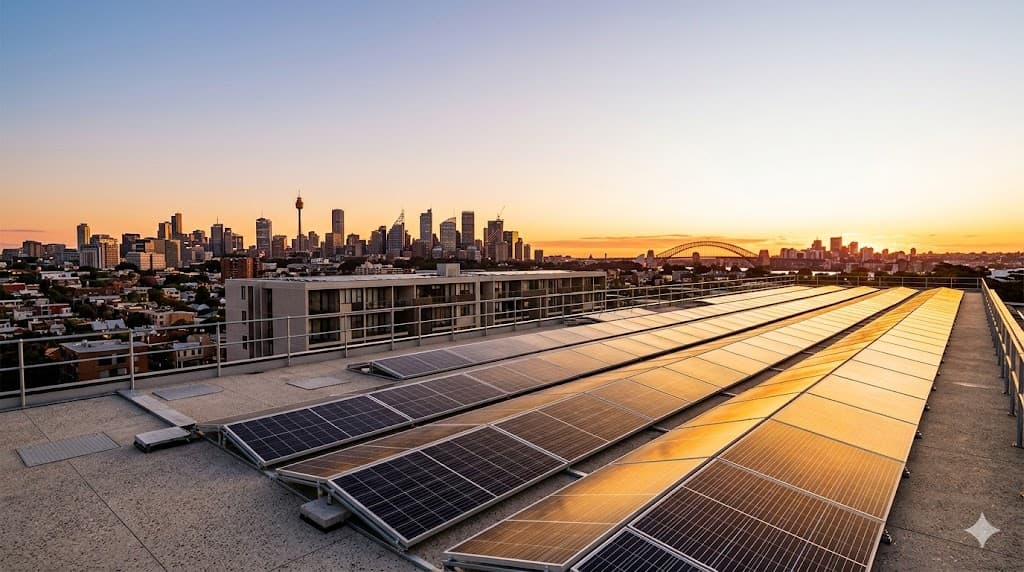
Solar Panels on Strata Buildings: How to Get It Approved and Who Benefits
Solar panels on a suburban house are a no-brainer. On an apartment building? It gets complicated. The roof is common property. The electricity benefits need to be shared. The upfront cost can be significant. And getting dozens of owners to agree on anything is hard enough without throwing renewable energy into the mix.
Yet the economics are compelling. A well-designed solar system on a strata building can reduce common area electricity costs by 40–70%, improve the building's NABERS energy rating, increase property values, and generate a return on investment within five to eight years. Increasingly, it's the buildings that don't have solar that look like they're behind the times.
The Approval Process
Solar panel installation on a strata building involves modifying common property (the roof). The approval process depends on your state:
| State | Resolution Required | Key Consideration |
|---|---|---|
| NSW | Sustainability infrastructure resolution — passes unless 50%+ of votes are against (simple majority) | Solar classified as sustainability infrastructure under the 2021 amendments |
| Victoria | Special resolution (75%) for common property modifications | Some councils offer incentives for strata solar installations |
| Queensland | Ordinary resolution or committee decision depending on cost | Body corporate can approve directly if under the committee spending limit |
| ACT | Ordinary resolution for sustainability infrastructure | Strong government incentives available |
| WA / SA / TAS | Typically special resolution | Check local council planning requirements for heritage or visual impact areas |
In NSW, the classification of solar panels as sustainability infrastructure is a significant advantage. The lower voting threshold — which only requires that fewer than 50% of the votes cast are against the motion — makes approval much more achievable than under the old special resolution requirements.
The Economics: Does It Stack Up?
The financial case for strata solar depends on the building's common area electricity consumption. Buildings with high common area loads — lifts, pool pumps, air conditioning in lobbies, car park lighting and ventilation — benefit most.
| Building Size | Typical System Size | Estimated Cost | Annual Savings (Common Area) | Payback Period |
|---|---|---|---|---|
| Small (10–20 lots) | 10–20 kW | $10,000–,000 | $2,500–,000 | 4–6 years |
| Medium (30–60 lots) | 30–60 kW | $30,000–,000 | $7,000–,000 | 4–7 years |
| Large (80+ lots) | 80–150 kW | $80,000–,000 | $18,000–,000 | 5–8 years |
These figures assume the solar energy is consumed on-site by common area loads. Feed-in tariffs (exporting excess energy to the grid) are typically only 3–7 cents per kWh — far less than the 25–35 cents per kWh you save by consuming the energy directly. This is why system sizing should be matched to the building's daytime consumption profile, not maximised for roof coverage.
Who Benefits and How?
This is where strata solar gets politically interesting. The savings from a rooftop solar system accrue to the owners corporation's electricity bill, which is funded through levies paid by all owners. This means the benefit is shared proportionally across all lot owners through reduced levies — even if some owners would have preferred to spend the money elsewhere.
There are three common models for distributing solar benefits in strata:
Common Area Only: The simplest approach. Solar energy offsets the building's common area electricity costs. All owners benefit through lower levies. No individual lots are connected. This is by far the most common and least contentious model.
Embedded Network: The building operates as a mini electricity retailer, distributing solar energy to individual lots. This requires regulatory compliance with the Australian Energy Regulator and is significantly more complex. Some larger buildings and new developments use this model.
Virtual Net Metering: Emerging technology that allows solar credits to be allocated to individual lot electricity bills. Not yet widely available in Australia but being trialled in some jurisdictions.
Battery Storage: Worth the Extra Investment?
Adding battery storage to a strata solar system allows excess daytime generation to be stored and used during evening and overnight peak periods. This can increase self-consumption rates from 40–60% (solar only) to 70–90% (solar plus battery), reduce reliance on expensive peak-period grid electricity, and provide backup power for essential common area systems during blackouts.
However, batteries add significant upfront cost (,000–,000 depending on capacity) and have a shorter lifespan (typically 10–15 years) than solar panels (25+ years). The payback calculation is less clear-cut than for solar alone, particularly in buildings where common area consumption is low overnight.
Roof Space and Structural Considerations
Not every strata building is suited to solar. Key factors include available unshaded roof area (north-facing is ideal, but east and west orientations still produce 80–85% of optimal output), structural capacity of the roof to support panel weight (typically 15–20 kg per panel), presence of other rooftop equipment like HVAC systems, water tanks or antennas that may limit available space, heritage or planning restrictions in some areas that limit visible rooftop modifications, and strata plan ownership of the roof — confirming it is common property and not allocated as a lot.
Government Incentives
Federal and state incentives significantly reduce the cost of strata solar installations. The federal Small-scale Renewable Energy Scheme provides Small-scale Technology Certificates (STCs) that effectively discount the system cost by ,000–,000 for a typical strata installation. Some state and local governments offer additional rebates or grants for community and strata solar projects. The NSW Strata Solar initiative through Energy NSW has provided co-funding for solar feasibility studies and installations in strata buildings.
Maintenance and Ongoing Management
Solar panels require minimal maintenance — typically an annual clean and electrical inspection. The owners corporation should budget –,500 per year for maintenance, include the solar system in its 10-year capital works fund plan, ensure the installation warranty (typically 10 years for workmanship, 25 years for panel performance) is registered in the name of the owners corporation, and monitor system performance through an online monitoring portal.
How UnitBuddy Helps
UnitBuddy's sustainability assessment tracks whether your building has solar installed, and how that affects your energy costs relative to comparable buildings. Buildings with solar consistently score higher on the UnitBuddy wellness index, reflecting both the financial benefit and the growing buyer preference for sustainable buildings.
Solar on a strata building is one of the highest-return capital investments an owners corporation can make. The approval process has never been easier, the economics have never been better, and the technology is proven. If your building doesn't have solar yet, the real question is: why not?