How to Force a Strata Scheme to Fix a Defect When They Keep Ignoring You
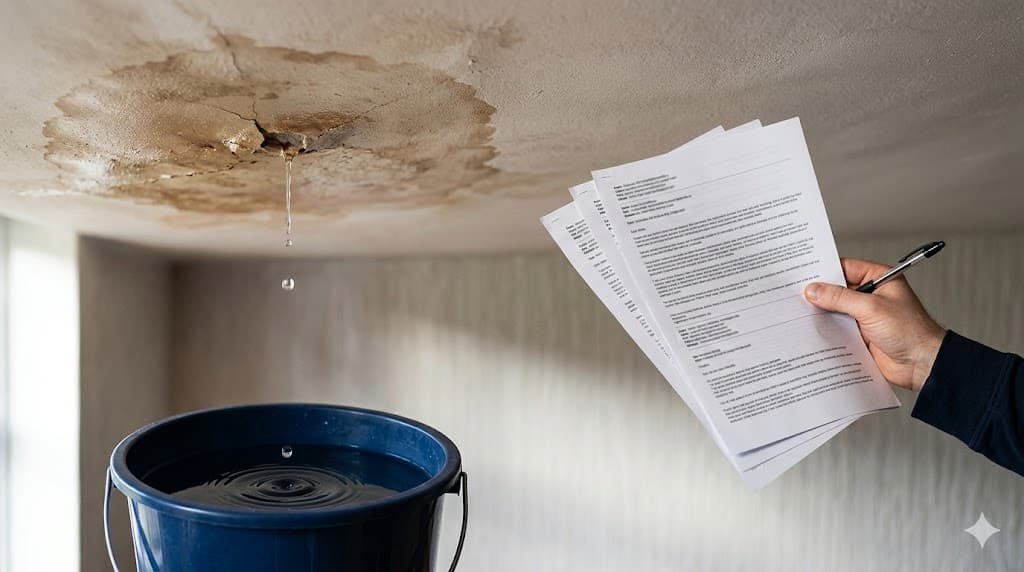
You've reported the leak. You've emailed the strata manager. You've raised it at the AGM. And nothing happens. Months pass. The stain on your ceiling grows. The mould spreads. The owners corporation keeps kicking the can down the road, citing "lack of funds" or "ongoing investigations" or simply not responding at all.
This is one of the most frustrating and common experiences in Australian strata living. The owners corporation has a legal duty to repair and maintain common property — but enforcing that duty has historically required individual owners to fund expensive legal action. The 2025 NSW reforms have changed the game significantly.
The Legal Duty to Repair
Under section 106 of the Strata Schemes Management Act 2015 (NSW), the owners corporation has a strict duty to properly maintain and keep in a state of good and serviceable repair the common property and any personal property vested in the owners corporation. This is not discretionary. The committee cannot simply decide that a repair is too expensive or too inconvenient.
Since July 2025, this duty has been strengthened further. If a defect poses a risk to safety or prevents access to a lot or common property, the owners corporation must act immediately — even if it is pursuing legal action against the person who caused the damage. No more using litigation as an excuse to delay critical repairs.
The Escalation Pathway
Here is the step-by-step process for forcing action when your strata scheme is ignoring a defect:
| Step | Action | Timeline | Cost |
|---|---|---|---|
| 1 | Written notice to strata committee and manager | Allow 14–28 days for response | Free |
| 2 | Formal motion at general meeting | Next scheduled meeting or requisition a special general meeting | Free (minimal admin costs) |
| 3 | Complaint to NSW Fair Trading | Fair Trading will investigate and may issue compliance notices | Free |
| 4 | Mediation through Fair Trading | Typically 4–8 weeks to arrange | Free |
| 5 | Application to NCAT | Hearings typically within 3–6 months | $52– filing fee |
| 6 | Supreme Court action (complex matters) | 12+ months | $10,000–,000+ in legal costs |
Step 1: Put It in Writing
Never rely on verbal complaints. Send a written notice to the strata committee chairperson and the strata managing agent. Describe the defect precisely, include photographs, explain how it affects your lot, and request specific action within a stated timeframe. Reference section 106 of the Act explicitly. Keep copies of everything.
Step 2: Raise a Formal Motion
If the committee doesn't act, you can place a motion on the agenda for the next annual general meeting — or requisition a special general meeting if you can gather support from owners holding at least 25% of the unit entitlements. The motion should specifically direct the owners corporation to engage a qualified contractor to assess and rectify the defect.
Step 3: Complain to NSW Fair Trading (The New Weapon)
The October 2025 reforms gave NSW Fair Trading significant new powers to enforce the section 106 duty. Fair Trading can now issue compliance notices requiring the owners corporation to carry out specific repairs, enter into enforceable undertakings with non-compliant owners corporations, investigate complaints about failure to maintain common property, and impose penalties for ongoing non-compliance.
This is a genuine game-changer. Previously, the only option for an individual owner was to fund their own NCAT application. Now, Fair Trading can intervene directly — at no cost to the complaining owner.
Step 4: Mediation
Before NCAT will hear most strata disputes, you must attempt mediation through Fair Trading. The mediation service is free and facilitated by trained mediators. While outcomes are not binding unless both parties agree, mediation resolves a surprisingly high proportion of disputes — particularly when the owners corporation realises that Fair Trading is watching.
Step 5: NCAT Application
If mediation fails, you can apply to the NSW Civil and Administrative Tribunal. NCAT can order the owners corporation to carry out specific repairs, set a deadline for the work, and award compensation for damage to your lot caused by the failure to repair common property. Filing fees are modest (typically between and ), and you don't need a lawyer — though one is recommended for complex matters.
Step 6: Supreme Court (Last Resort)
For high-value or exceptionally complex defect matters — particularly those involving claims against developers, builders and certifiers alongside the owners corporation — the Supreme Court may be the appropriate forum. This is expensive and should only be pursued with specialist legal advice.
The Extended Limitation Period
One of the most significant 2025 reforms is the extension of the limitation period for bringing action against an owners corporation for failure to repair and maintain common property. Previously, owners had just two years to commence proceedings. That window has now been extended to six years.
| Period | Before 2025 Reforms | After 2025 Reforms |
|---|---|---|
| Time to sue owners corporation for failure to repair | 2 years | 6 years |
| Statutory warranty — major defects (developer/builder) | 6 years | 6 years (unchanged) |
| Statutory warranty — minor defects (developer/builder) | 2 years | 2 years (unchanged) |
Common Excuses — And Why They Don't Hold Up
Strata committees frequently offer excuses for inaction. Here's why none of them are legally sufficient:
"We don't have the funds." The owners corporation can and must levy a special levy or take out a loan to fund essential repairs. Lack of funds is not a defence to a breach of section 106.
"We're waiting for the developer to fix it." The 2025 reforms explicitly state that the owners corporation cannot delay safety-critical repairs while pursuing the developer. The owners corporation must fix the problem and then recover the costs.
"It's your lot, not common property." If the defect is in common property (which includes things like the building's waterproofing membrane, roof, external walls, windows and structural elements), the owners corporation is responsible. If the boundary between lot and common property is unclear, seek legal advice or review your strata plan.
"The committee voted against it." A committee vote not to repair common property is a breach of the statutory duty. Individual owners can challenge such a decision through mediation and NCAT.
How UnitBuddy Helps
UnitBuddy tracks your building's maintenance responsiveness as part of its overall wellness assessment. Buildings that consistently defer maintenance score lower on the UnitBuddy health index, which can affect perceived property value. UnitBuddy also provides benchmarks showing how your building's repair spending compares to similar buildings — giving you hard data to support your case at committee meetings.
You have a legal right to a properly maintained building. The 2025 reforms have given individual owners more tools than ever to enforce that right. Don't accept inaction — escalate systematically and use every pathway available to you.