Who Is Responsible for Repairs in a Strata Building? Common Lot vs. Common Property Explained
A pipe bursts behind your bathroom wall. A window seal fails and rain comes in. The balcony waterproofing membrane cracks. In each case, the first question is always the same: who pays for this?
In strata, the answer depends on a fundamental distinction — whether the item that needs repair is common property (the owners corporation's responsibility) or part of your individual lot (your responsibility). But the boundary between the two is often misunderstood, inconsistently applied, and the source of more strata disputes than almost anything else.
The Basic Rule
Under section 106 of the Strata Schemes Management Act 2015 (NSW), the owners corporation has a duty to properly maintain and keep in a state of good repair the common property and any personal property vested in the owners corporation.
As a lot owner, you're responsible for maintaining everything within your lot that isn't common property.
Simple enough in theory. The complication is knowing where common property ends and your lot begins.
What Is Common Property?
Common property is everything in the strata scheme that isn't part of an individual lot. It's defined by the strata plan — the registered plan that shows the boundaries of each lot.
Typical examples of common property include:
- The building's structural elements: foundations, load-bearing walls, roof, external walls
- Common area spaces: lobbies, hallways, stairwells, lifts, car park driveways
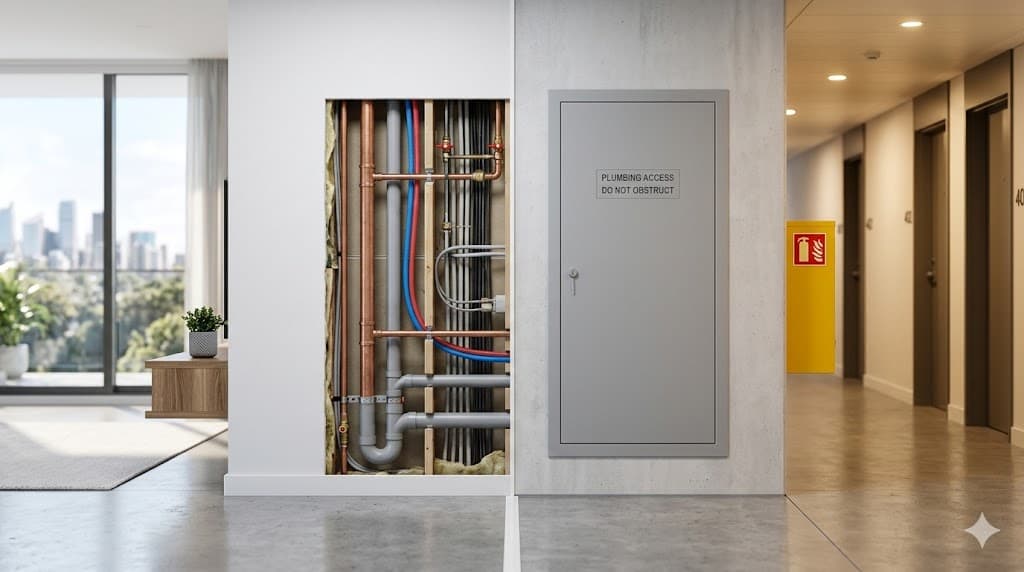
- Building systems: fire safety systems, main plumbing risers, electrical mains, intercom systems
- External elements: facades, balcony slabs (the structural concrete, not necessarily the surface), windows (in some cases)
- Shared facilities: pools, gyms, gardens, BBQ areas
Where It Gets Confusing
The boundary between common property and individual lots varies depending on how the strata plan is drawn. In some buildings, the boundary is at the inner surface of walls. In others, it's at the centre of walls. This seemingly minor difference has huge practical implications.
| Item | Typically Common Property | Typically Lot Owner | Notes |
|---|---|---|---|
| Main water pipes (risers) | Yes | Pipes that serve multiple lots are common property | |
| Branch pipes within your lot | Yes | Pipes from the riser to your taps are usually your responsibility | |
| External windows | Usually yes | Depends on strata plan; often common property in NSW | |
| Internal walls | Yes | Non-structural internal walls are usually part of your lot | |
| Balcony structural slab | Yes | The concrete slab is common property | |
| Balcony tiles/surface | Varies | Varies | May depend on strata plan and any by-laws |
| Waterproofing membranes | Usually yes | Often considered part of the building structure | |
| Kitchen and bathroom fixtures | Yes | Your taps, sinks, toilets are your responsibility | |
| Front door | Varies | Varies | Often the exterior side is common property, interior is lot |
| Smoke alarms | Yes (within lot) | Owner must maintain; building fire system is common property |
The 2025 Reforms: Stronger Maintenance Enforcement
The Strata Schemes Legislation Amendment Act 2025 significantly strengthened the enforcement of the section 106 duty. Key changes include:
NSW Fair Trading enforcement powers: Fair Trading can now investigate potential breaches of the duty to maintain common property, including powers to demand documents, enter premises, issue compliance notices and accept enforceable undertakings.
Extended limitation period: Owners now have six years (up from two) to take legal action against the owners corporation for failure to maintain common property.
Urgent repair obligations: If a defect poses a risk to safety or access, the owners corporation must act immediately, regardless of any ongoing legal proceedings.
Common Dispute Scenarios
The Leaking Bathroom
Water leaking from one lot into another is the most common strata dispute. The key question is: where is the leak coming from? If it's from a common property pipe (a riser or branch on the common property side of the boundary), the owners corporation pays. If it's from a lot owner's fixture (a cracked shower base, failed tap washer, or broken washing machine hose), the lot owner pays.
In practice, finding the source often requires investigation — and the cost of investigation itself can be contentious.
The Crumbling Balcony
Balcony repairs are a classic grey area. The structural slab is common property, but the tiles, railings and waterproofing may or may not be. If your balcony's waterproofing fails and water enters the building structure, the owners corporation typically bears the repair cost. But if the failure was caused by the lot owner's modifications (like drilling into the membrane), the owner may be liable.
The Noisy Plumbing
Old buildings with ageing common property plumbing that creates noise in individual lots present a question of who should pay for upgrades. If the noise is caused by common property infrastructure, the argument for owners corporation responsibility is strong.
How to Resolve Disputes
If you believe the owners corporation is responsible for a repair and they disagree, you have several options. Start by putting your request in writing with photos and a clear explanation of why you believe it's a common property issue. If the committee doesn't act, escalate to your strata manager. If that fails, you can apply to NCAT for mediation or adjudication.
Under the 2025 reforms, you can also lodge a complaint with NSW Fair Trading, which now has investigation and enforcement powers specifically for section 106 breaches.
How UnitBuddy Helps
UnitBuddy tracks maintenance spending patterns across your building and benchmarks them against similar buildings. This helps committees identify whether they're spending too little on maintenance — a common precursor to expensive emergency repairs — and gives owners data to support requests for proactive maintenance.
In strata, knowing who pays for what isn't just an academic exercise — it's the difference between a quick fix and a ,000 argument. Check your strata plan, understand the boundaries, and don't be afraid to push back if the committee is dodging its maintenance obligations.